Steel bolts rust. The oldest and most economical defense is zinc, which both seals the steel away from moisture and sacrificially corrodes to protect exposed areas. Buyers comparing fastener quotations usually meet two zinc finishes: electroplating and hot-dip galvanizing. They look similar in a photograph but perform very differently.
Electro zinc plating (electrogalvanizing) deposits zinc from an electrolyte onto the finished fastener. The layer is thin - commonly 5 to 15 micrometers for standard commercial parts - smooth, bright, and dimensionally precise, so plated bolts thread cleanly into standard nuts. Modern trivalent chromate passivation adds a blue, yellow, or black tint and improves salt-spray performance without the old hexavalent chromium.
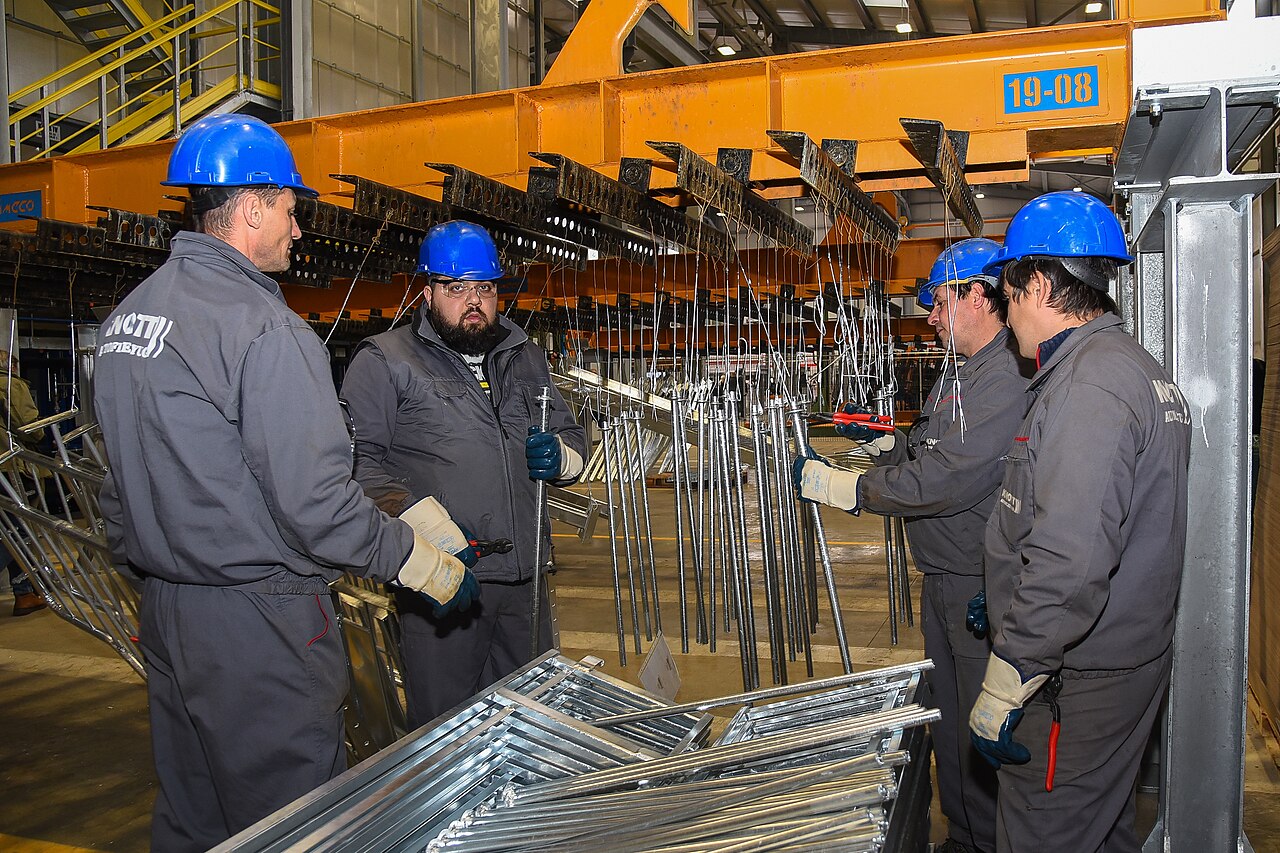
Hot-dip galvanizing (HDG) immerses the finished fastener in molten zinc at about 450 degrees Celsius. Metallurgical alloy layers form between iron and zinc, producing a typical total coating of 45 to 85 micrometers per ISO 1461, with the characteristic matte, crystalline spangle surface. HDG fasteners are usually tapped oversize after galvanizing or supplied with galvanized nuts matched to the thread.
Corrosion performance is the main reason to choose HDG. Depending on the environment, a properly hot-dip galvanized bolt can last 20 to 50 years outdoors before significant rust appears, because the thick zinc layer simply takes longer to consume and its alloy layers are themselves corrosion-resistant. Electroplated coatings give years of service indoors or in mild conditions, but in coastal or industrial atmospheres red rust may appear far sooner.
Each finish has trade-offs. Plating keeps tight tolerances, a clean appearance, and low cost - ideal for indoor machinery, appliances, furniture, automotive interiors, and painted assemblies. HDG adds noticeable thickness, which affects thread fit and close-tolerance holes, and it cannot match a polished look - but little else at a comparable price beats it for bridges, transmission towers, guardrails, solar carports, outdoor steel structures, and coastal infrastructure.
Mechanical grades interact with the finish. High-strength class 10.9 and 12.9 parts absorb hydrogen during acid pickling and electroplating; without a prompt hydrogen-relief bake, the bolts can fail by delayed hydrogen embrittlement - the reason some standards restrict electroplating at the highest strength levels. HDG on quenched and tempered structural bolts also needs controlled process temperatures, and galvanized high-strength assemblies are commonly installed as matched bolt-and-nut sets such as structural EN 14399 assemblies.
A frequent specifier question is whether zinc-plated and galvanized fasteners can be mixed in one joint. Physically they may fit when threads are matched, but coating-life differences make it poor practice on exposed structural work; keep the finish consistent within an assembly and use compatible washers.
Beyond these two, heavy-duty buyers sometimes specify mechanical galvanizing for high-strength parts (no hydrogen risk), zinc-flake coatings such as Geomet for automotive and wind-industry use (thin, high salt-spray performance, no hydrogen embrittlement), or stainless steel where appearance or maximum service life justifies the cost. Selecting the finish is a lifetime-cost decision, not merely a cosmetic one.
As a fastener manufacturer, Matrix Fasten supplies zinc-plated bolts and screws in trivalent blue, yellow, and black finishes, ISO 1461 hot-dip galvanized fasteners with matched tapped nuts, and zinc-flake coatings on engineered orders. Every batch can be accompanied by coating-thickness and salt-spray test results.
Send us the service environment and expected service life; we will quote the finish that meets it rather than the most expensive one on the shelf.