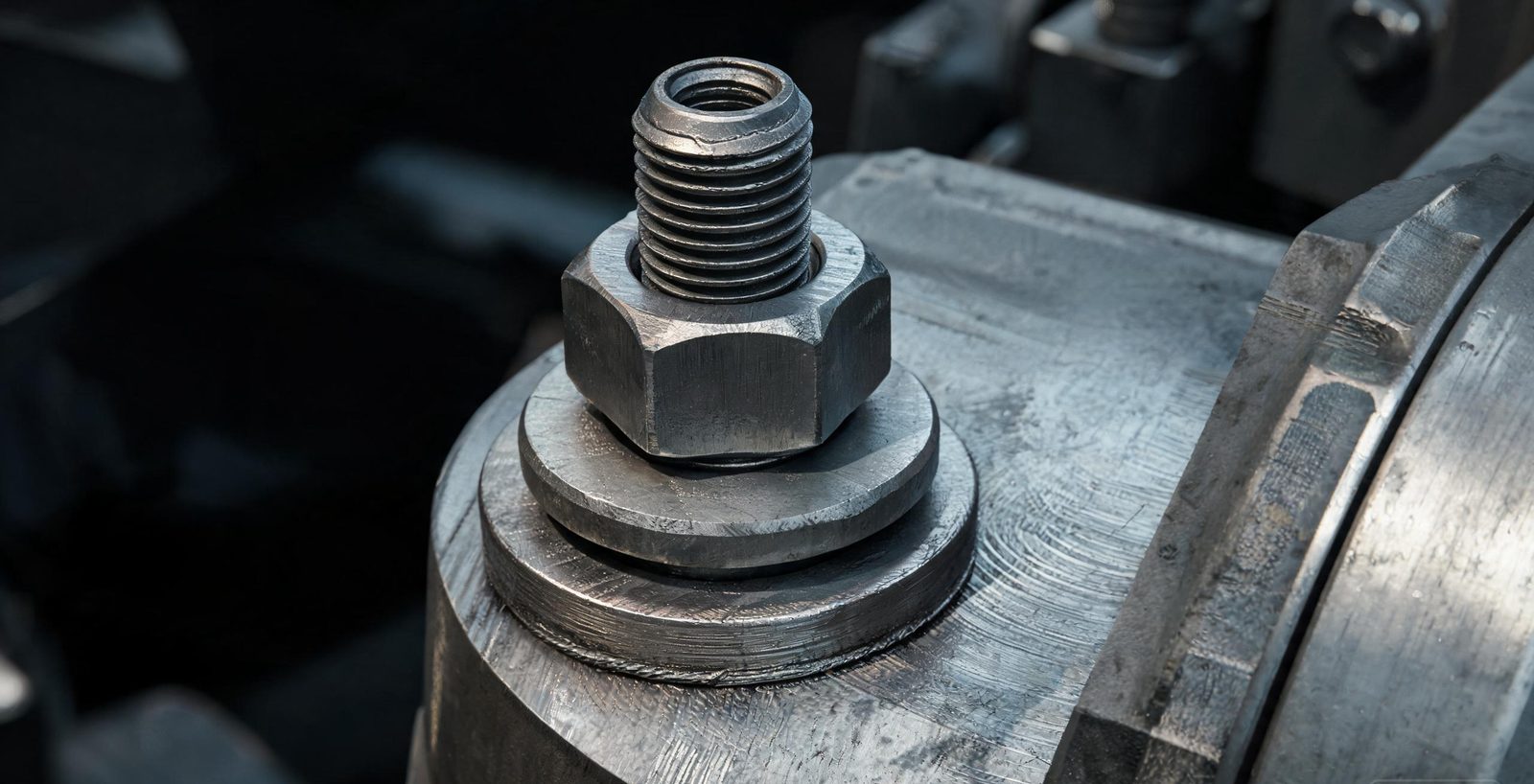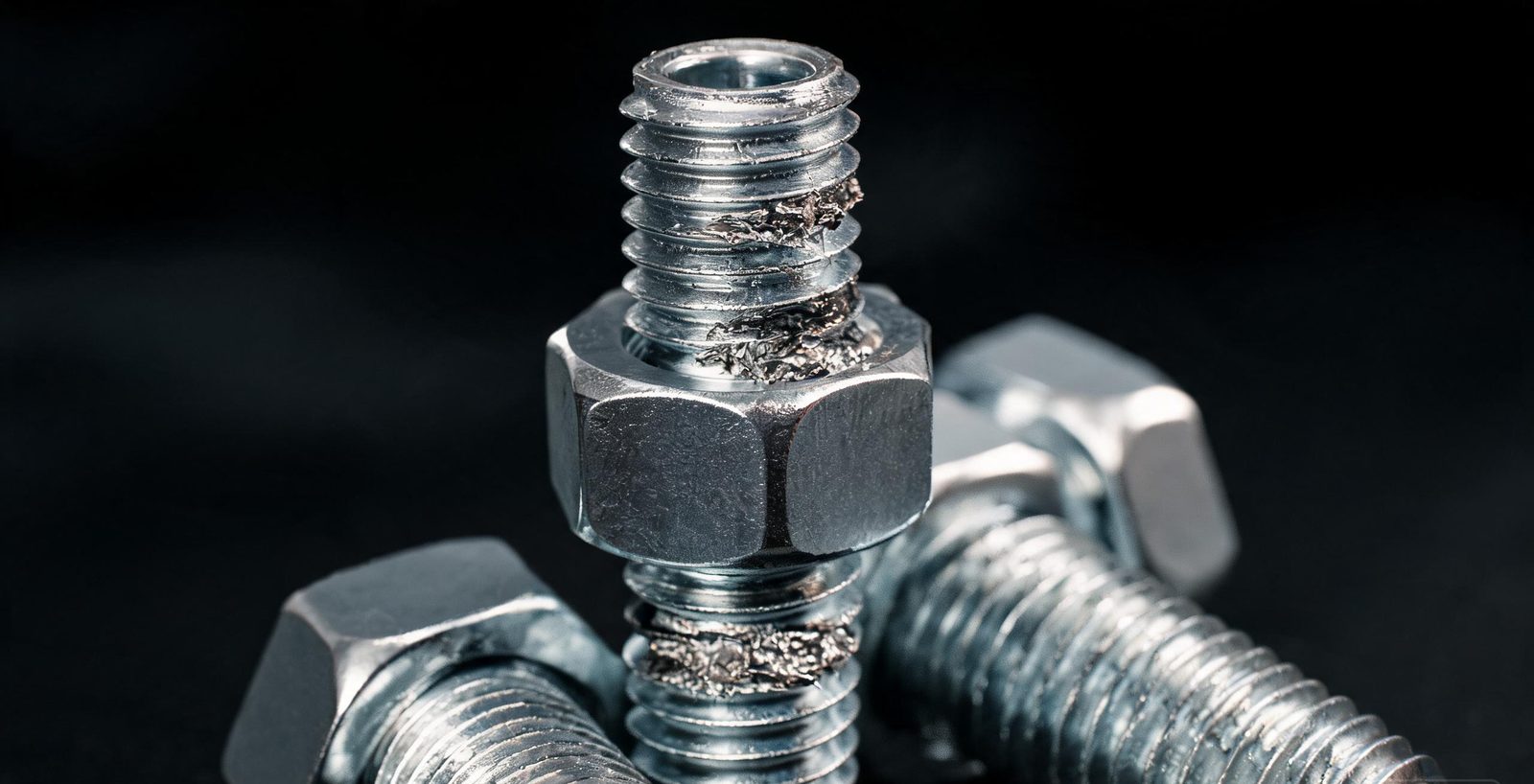
Stainless steel fasteners resist corrosion, but they have one well-known weakness: under load they can cold-weld to each other. The result is galling - threads that seize, tear, and in severe cases lock a bolt into a nut so firmly that the only remedy is cutting it out. It is not a defect in the fastener; it is a property of austenitic stainless steel that has to be designed around.
Why does it happen? Austenitic grades such as 304 (A2) and 316 (A4) have a passive chromium oxide layer that protects them from rust. When two stainless surfaces rub under pressure, that layer can be removed faster than it reforms, exposing fresh metal. Fresh metal on fresh metal welds at a microscopic level, and the asperities tear away. Once started, the process feeds itself: rougher surfaces mean more friction, more heat, more tearing.
What makes galling more likely: high tightening speed, high contact pressure, long thread engagement, coarse surface finish, and matching material hardness on both parts. Stainless on stainless is the worst case. Stainless into stainless without lubrication at high rpm is close to a guarantee on larger sizes.
Prevention starts with simple installation habits. Slow down - hand threading or low-speed tools prevent the heat and pressure spikes that start galling. Lubricate the threads with an anti-seize or a suitable thread lubricant; a proper lubricant also reduces the torque needed for the same preload. Make sure the threads are clean and undamaged before assembly, because a burr is a starting point for seizure.
Material combinations help too. Pairing stainless bolts with stainless nuts of a different grade, or with a slightly harder nut, reduces the tendency to weld. For heavily loaded assemblies, a stainless bolt with a high-strength alloy or coated nut can be a practical compromise where corrosion exposure allows it.
Product choices provide the most reliable fix. Anti-galling surface treatments, molybdenum-based coatings, and cold-rolled threads with a smooth finish all reduce friction. In extreme cases, designs avoid stainless-to-stainless contact altogether by using a dissimilar material for one side of the joint.
When a stainless assembly has already galled, do not keep tightening. Back the fastener off a fraction of a turn, apply penetrant, and work it slowly. If the threads have torn, the joint must be cut out and the parts replaced, because the thread form is no longer reliable.
One related point on corrosion: passivation after machining removes embedded iron and restores the oxide layer, which improves both corrosion resistance and surface consistency. For marine or chloride-rich environments, specify A4 (316) and confirm the passivation and cleanliness requirements in the purchase order.
Matrix Fasteners supplies stainless steel fasteners in A2 (304) and A4 (316) grades, in hex bolts, nuts, washers and anchors, with options for anti-galling coatings and passivated finishes. If you have a stainless assembly that seizes in service, send us the size, grade and tightening method and we will recommend a practical fix.