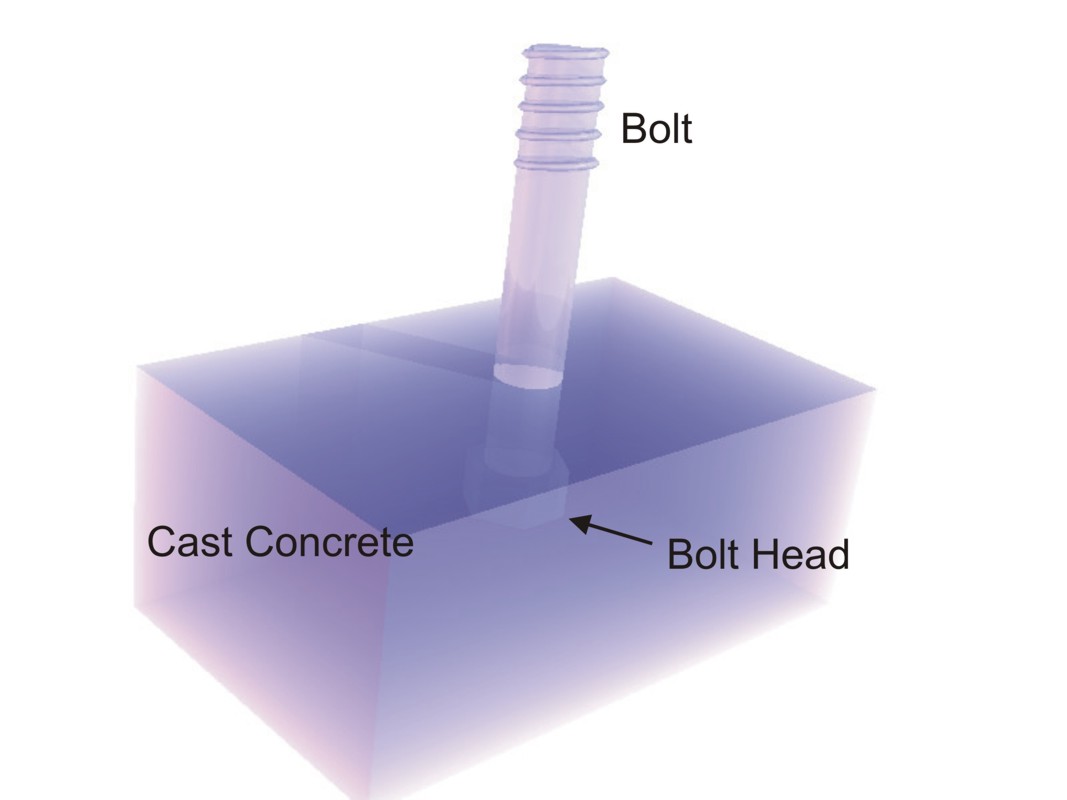
Anchoring machinery, racking, steel columns, or facades into concrete looks simple - but the small component transferring the load into the concrete deserves real engineering attention. Wedge anchors (also called through bolts or expansion anchors) are the most common mechanical anchor for static and moderately dynamic loads in cracked and uncracked concrete.
A wedge anchor consists of a threaded carbon- or stainless-steel stud with a formed neck and a separate expansion clip at the tip. When the nut is tightened, the stud pulls upward while the clip is driven over the neck, expanding against the wall of the drilled hole. The anchor then holds through friction and mechanical interlock.
Selecting the right anchor starts with the load. Check the required tensile (pull-out) and shear values against published ETA, ICC, or manufacturer data for the specific diameter, embedment, and concrete strength - typically C20/25 or C25/30 normal-weight concrete. Edge distance, spacing, and whether the concrete is cracked all reduce allowable loads; published tables include these factors, but only when your geometry meets the minimum edge and spacing requirements.
Diameter selection is driven by the clearance hole in the fixture. Common metric sizes run M6 through M24. A typical 12 mm anchor in sound concrete can hold several kilonewtons of tension, but real allowable values depend on embedment and safety factors - never extrapolate from one job to another without checking the table.
Material and finish follow the environment. Zinc-plated wedge anchors suit dry, indoor conditions such as warehouses and production floors. Hot-dip galvanized anchors handle weather-exposed steelwork outdoors. For coastal, chemical, or permanently damp environments, specify 304 (A2) or 316 (A4) stainless steel wedge anchors - corrosion at the expansion zone is where cheap anchors fail years after installation.
Correct installation is where most anchor problems begin. First, drill the hole to the anchor's specified diameter and at least the specified embedment depth, plus a little extra for dust space. Second, blow, brush, and blow the hole again - residual dust dramatically lowers holding power. Third, drive the anchor through the fixture until the washer contacts it, then tighten the nut to the published installation torque with a calibrated torque wrench.
Avoid three classic mistakes: reusing a wedge anchor (the clip expands once and never resets); drilling through rebar without adjusting position; and setting anchors too close to an edge or to each other, which causes concrete-cone failures. For close-edge and close-spacing situations, consider undercut anchors or adhesive anchors instead.
For heavy dynamic loads - crane rails, vibrating machinery, elevators, or seismic applications - a standard wedge anchor may not be the right choice at all. Seismically qualified anchors with proper ratings, or cast-in anchor channels and headed studs, are designed for these conditions and are often required by code.
Beyond wedge anchors, buyers frequently specify sleeve anchors for lighter duties and softer base materials, drop-in anchors for flush female threads in precast elements, and chemical anchors for high loads, close edges, and cracked concrete. Matching the anchor family to the application is the most efficient way to control both cost and liability.
Matrix Fasten supplies wedge anchors, sleeve anchors, drop-in anchors, and chemical anchor studs in carbon steel and stainless steel, metric and inch sizes, with test reports available per batch. If you are a distributor or contractor planning a project, send us the base material, loads, and environment - we will help you size the anchor before you order.