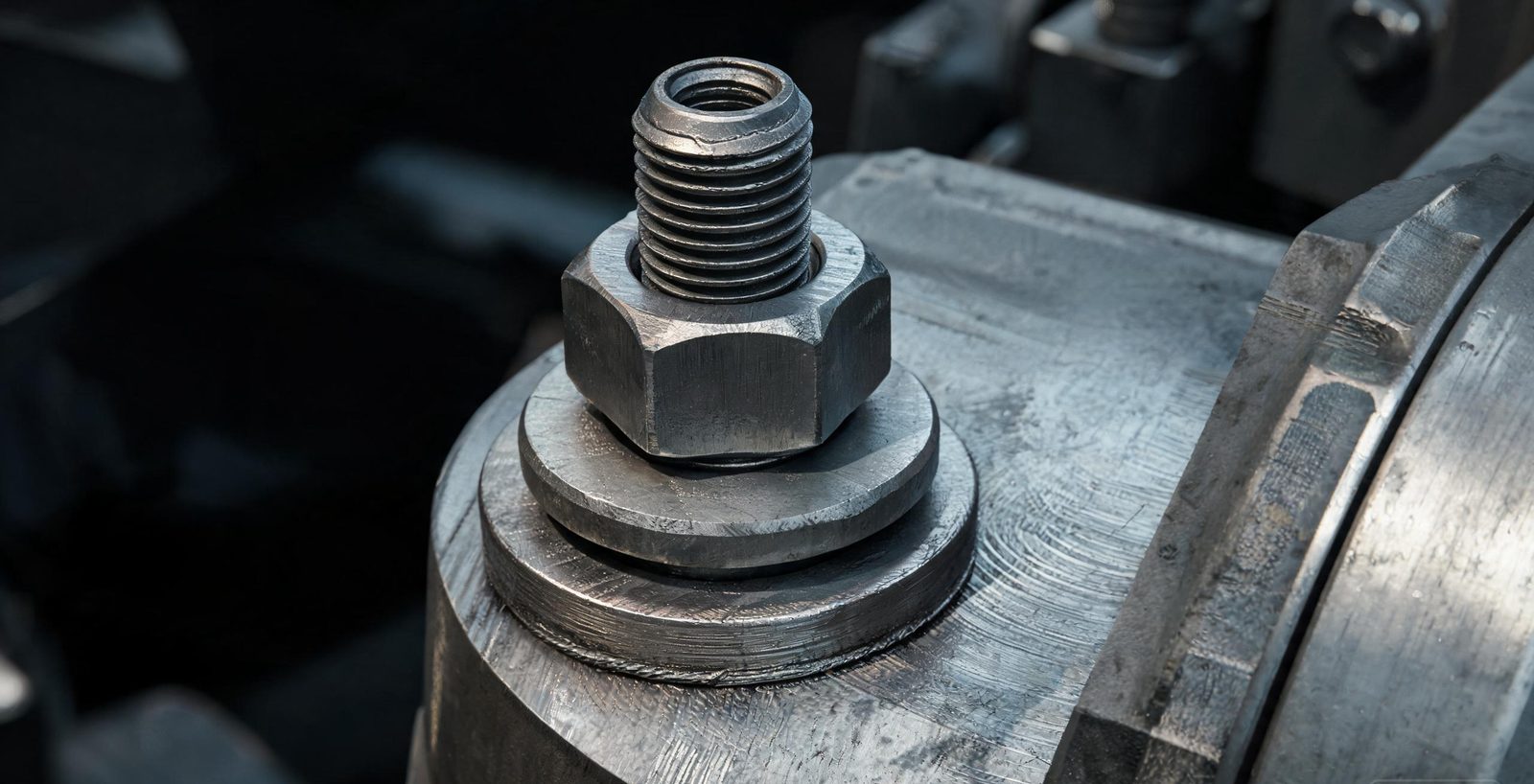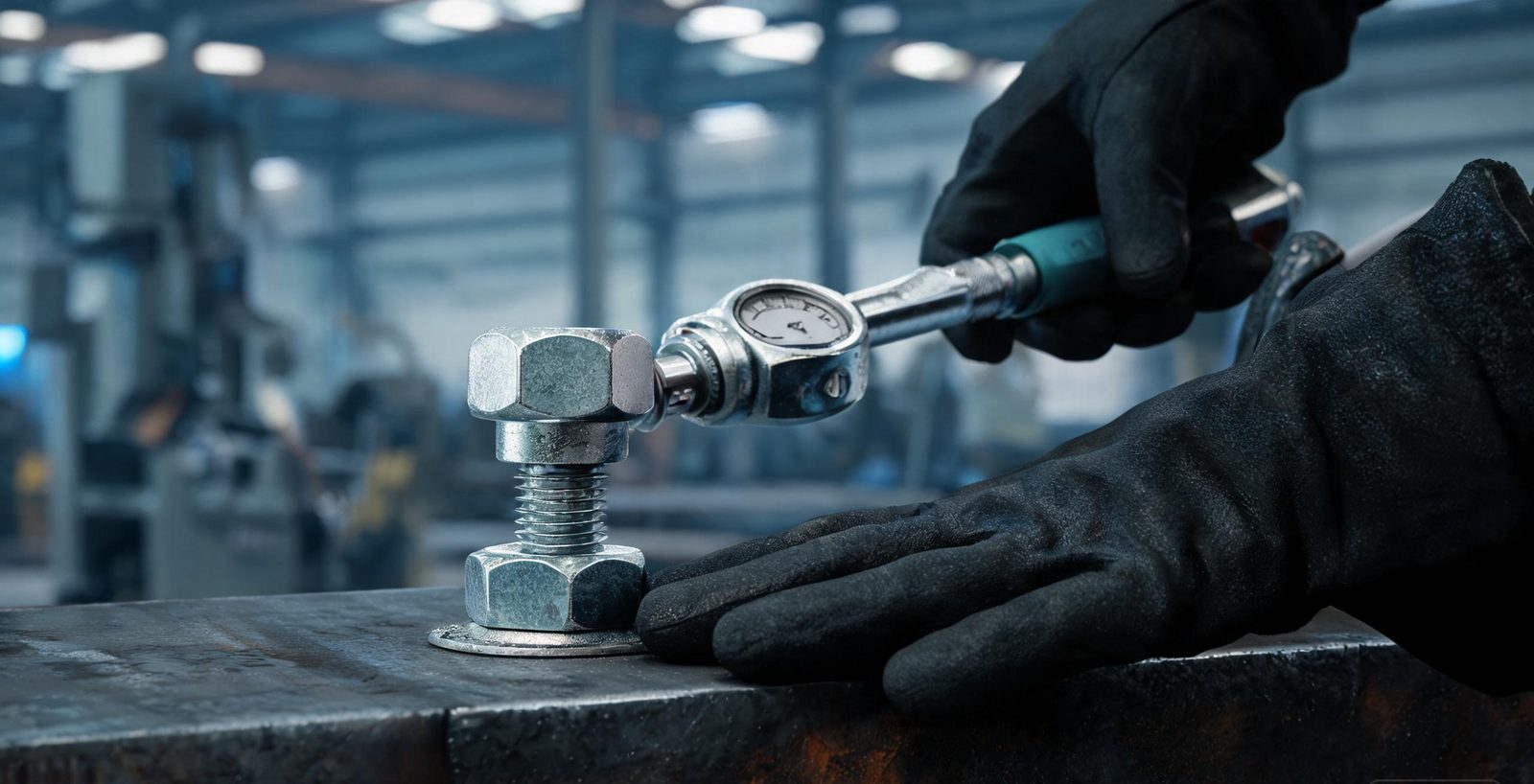
Every bolted joint is a spring. The bolt stretches, the clamped parts compress, and the joint only stays tight while the bolt keeps pulling. Torque is simply the cheapest way to approximate that pulling force on the factory floor or on site. This guide explains what the numbers mean and how to use a hex bolt torque chart without over-trusting it.
The relationship is usually written as T = K x F x d, where T is torque, F is the desired preload, d is the nominal bolt diameter, and K is a friction coefficient. For as-supplied zinc-plated steel bolts, K typically falls between 0.18 and 0.22. With molybdenum disulphide or wax-based lubricant it drops toward 0.12 to 0.16. That is why the same bolt at the same torque can produce very different preload depending on whether it is dry, oiled, or coated - torque is a friction measurement as much as a force measurement.
Typical tightening values for metric hex head bolts, class 8.8, dry zinc-plated, at roughly 65 percent of proof load: M8 about 24 Nm, M10 about 48 Nm, M12 about 83 Nm, M16 about 200 Nm, M20 about 390 Nm, M24 about 680 Nm. Class 10.9 generally runs about 30 to 40 percent higher, so M10 is around 65 Nm and M16 around 270 Nm. Class 4.8 runs roughly 40 percent lower. Treat these as starting points for static, non-critical joints - not as design values.
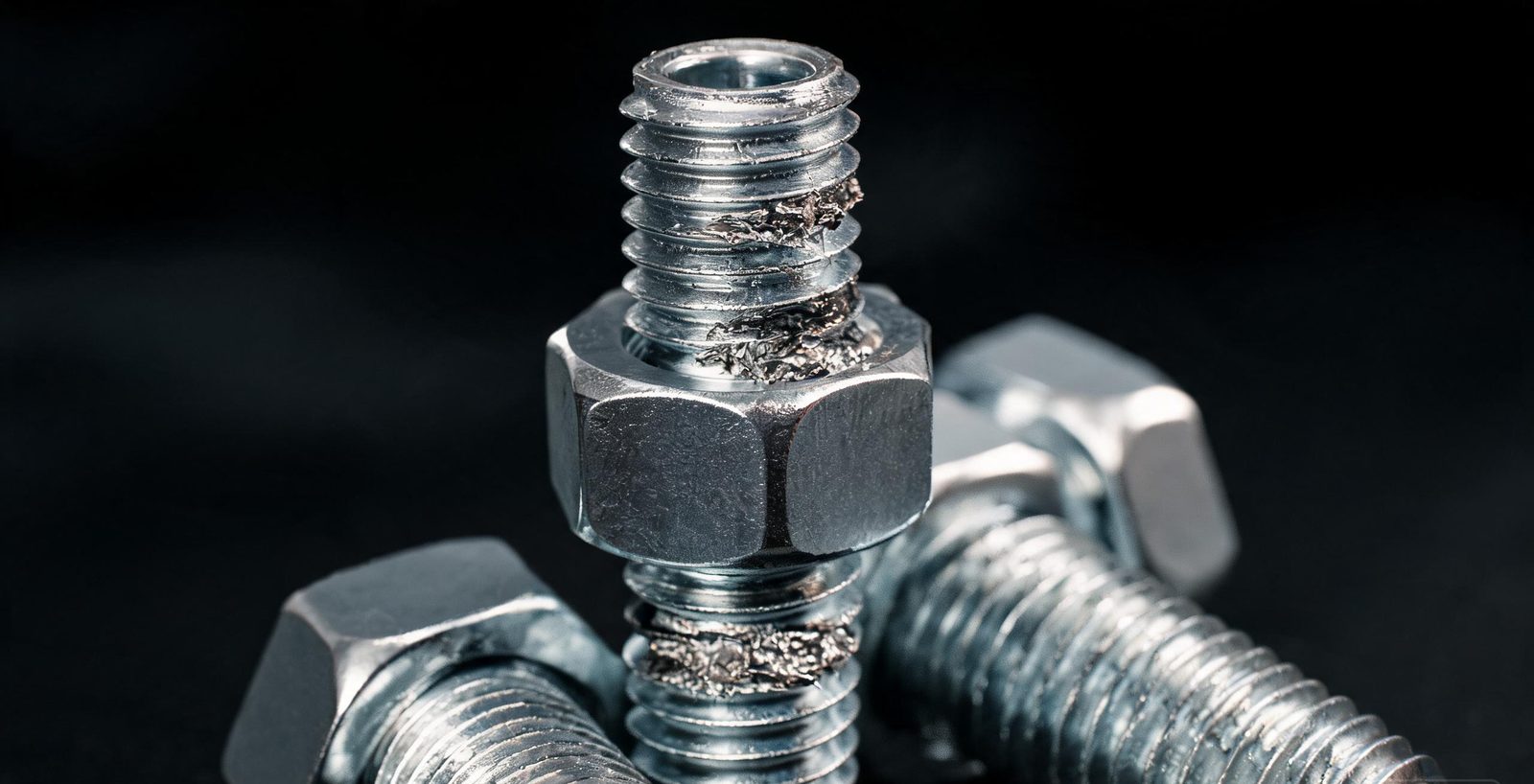
Three factors move the real number far more than most buyers expect. First, friction: a dry, lightly rusted bolt can need 20 percent more torque than a clean, lubricated one to reach the same preload. Second, thread condition: tapped holes in castings and rolled versus cut threads behave differently. Third, joint stiffness: a short bolt clamping rigid steel reaches preload quickly, while a long bolt through a soft gasket needs more rotation for the same tension.
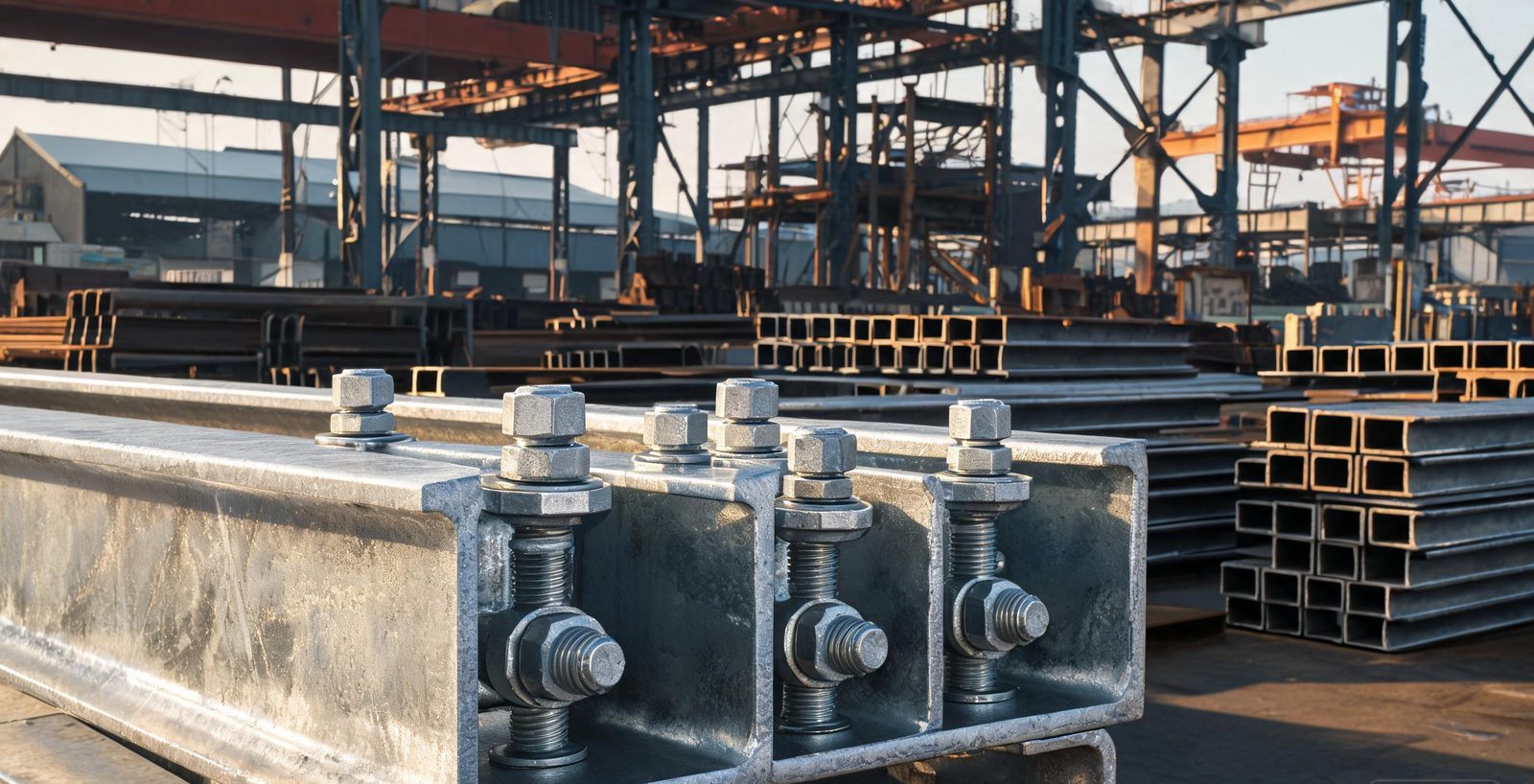
For anything safety-related - structural steel, lifting equipment, pressure assemblies, machinery subject to vibration - do not rely on torque alone. Use torque plus turn (the angle method), a calibrated torque wrench with a documented calibration date, or direct tension measurement with a load cell or ultrasonic extensometer. In critical joints, torque scatter can easily be plus or minus 25 percent.
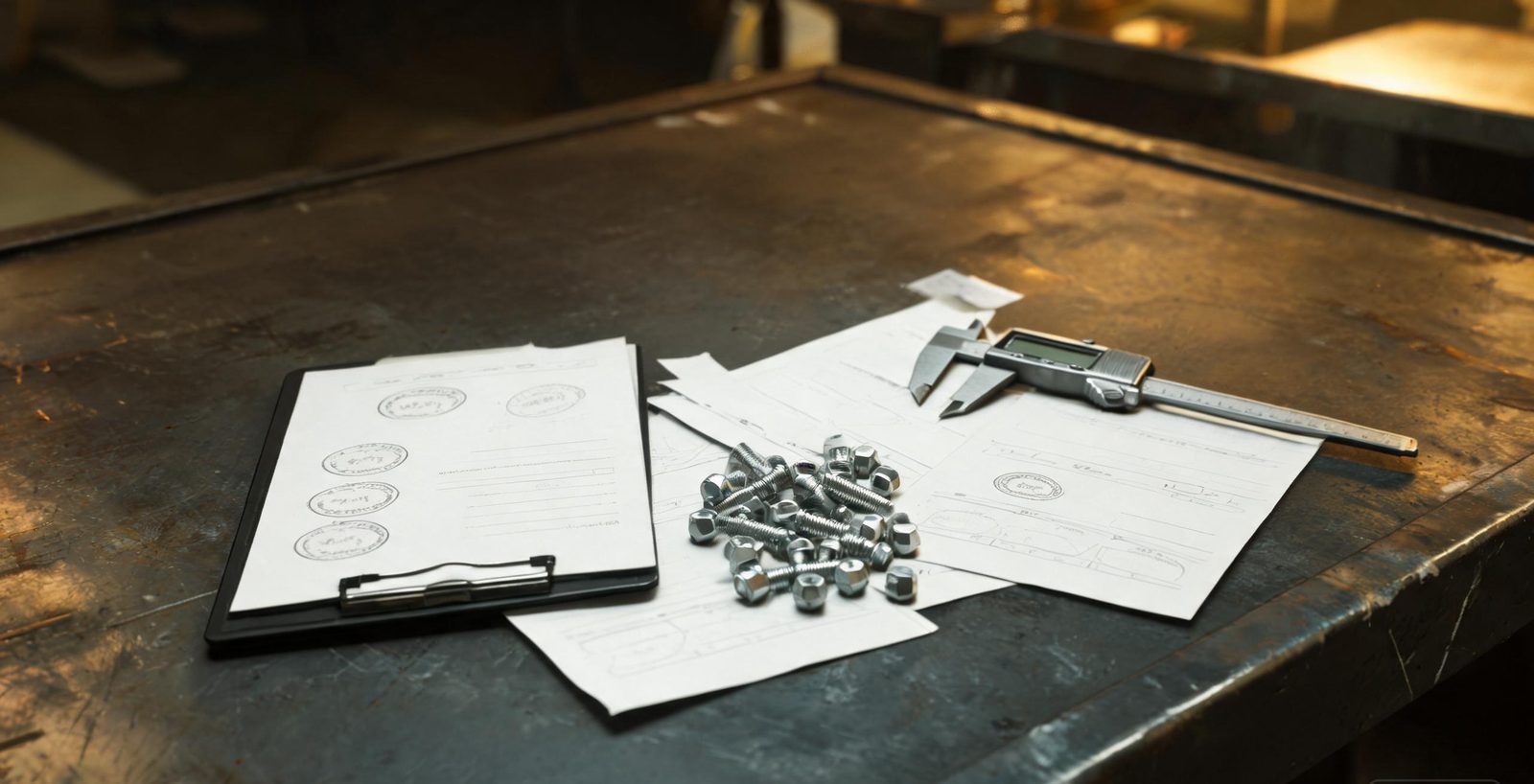
On the receiving side, buyers should confirm a few basics before accepting a torque schedule: the property class stamped on the head, the coating type and thickness, whether lubricant is applied and by whom, and the thread tolerance (6g for bolts, 6H for nuts). A torque value with no class, coating, and lubrication stated is an incomplete specification.
Matrix Fasteners produces metric hex head bolts in classes 4.8 through 12.9, sizes M5 to M48, with rolled threads, controlled coating thickness, and batch-level mechanical reports. If you need a torque table that matches your specific joint, coating and lubrication, send your assembly details and our engineering team will prepare one within one working day.